
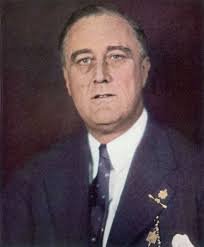
Franklin D. Roosevelt — Historical Context
FDR personality type explained: a John-Major leadership pattern in Beatleology.
The FDR personality type in Beatleology can only be understood by looking at the emotional condition of the country in 1933.
FDR Personality Type
The FDR personality type is a classic John-Major leadership pattern in Beatleology. March 1933, the United States was not simply in a recession.
It was in a psychological crisis.
Banks were collapsing across the country.
Millions of Americans had already lost their savings.
Businesses were closing, farms were failing, and unemployment had reached levels the nation had never experienced before.
But the most dangerous problem was not economic.
It was belief.
The FDR personality type in Beatleology can only be understood by looking at the emotional condition of the country in 1933.
People no longer trusted banks.
They no longer trusted markets.
Many were beginning to lose trust in government itself.
Across the world, democracies were falling and strongman leaders were rising. Americans could see it happening — and feared it could happen here.
When Franklin D. Roosevelt took office as president, he did not inherit a normal political situation.
He inherited a population that expected things to get worse.
His first major action was not a law, a tax plan, or a program.
It was a conversation.
In his first Fireside Chat, Roosevelt spoke directly to citizens over the radio in calm, ordinary language. He explained what had happened to the banks, what the government was doing, and — most importantly — why people should not panic.
Within days, Americans began redepositing money into banks that had just been closed.
Before the economy recovered, confidence recovered.
This is the key moment Beatleology helps explain:
Roosevelt did not begin by fixing the system.
He began by fixing how people understood the situation.
This guide explains the FDR personality type and why his leadership restored confidence during crisis.
Why the New Deal Worked (Even When It Didn’t)
Here is something historians notice but Beatleology explains:
Not every New Deal program succeeded economically.
But Roosevelt still succeeded politically and psychologically.
Why?
Because John-Major leadership is not about technical perfection.
It is about narrative stability.
People felt the government was acting with them instead of upon them.
Confidence returned before prosperity did.
The economy followed the psychology.
The Paul-Minor Stabilizer
Pure John-Major leaders often burn out systems.
They inspire, but they don’t always build.
Roosevelt did not have that weakness.
His Minor Paul mattered.
Paul-Minor does not create vision — it implements vision into daily life.
Roosevelt translated abstract hope into tangible structure:
• Social Security
• Banking regulation
• Public works programs
• Infrastructure projects
These weren’t just policies.
They were emotional anchors.
The public could see recovery taking physical form.
John gave meaning.
Paul made it livable.
Comparative Beatleology
Roosevelt resembles leaders whose authority depended on persuasion rather than dominance.
His influence came from alignment.
He rarely tried to overpower opposition.
He outlasted it.
That is a hallmark of John-Major leaders supported by Paul-Minor execution:
endurance beats confrontation.
What Beatleology Explains About Roosevelt
This is why Beatleology matters.
FDR matters not because he lived in 1933, but because the same leadership pattern appears whenever groups face uncertainty — companies, families, teams, and even friendships.
He is important because the same leadership pattern appears whenever groups face uncertainty — companies, families, teams, and even friendships.
People do not first look for instructions.
They look for orientation.
Some leaders provide plans.
Others provide meaning.
The Beatle sign a person naturally expresses often determines which one they become.
Leadership During Crisis
World War II revealed the same leadership pattern.
Roosevelt did not command like a general.
He positioned the war as a moral and civilizational struggle — classic John framing.
But the war effort was organized through Paul systems:
rationing, production schedules, industrial coordination, and economic mobilization.
The country didn’t just fight.
It functioned.
Historians often debate whether the New Deal “worked.”
Some programs succeeded, others failed, and economists still argue about the numbers.
But something else happened first.
The country stabilized before the economy did.
Confidence returned before prosperity returned.
Roosevelt changed how Americans interpreted reality.
People felt the government was acting with them instead of on them.
Beatleology focuses on this type of leadership — not policy results, but psychological guidance during uncertainty.
The question is not whether Roosevelt solved the Depression immediately.
The question is why people trusted him while the crisis was
What This Beatleology Read Shows
Beatleology is not about ranking presidents.
It is about understanding how leadership works internally.
Roosevelt’s legacy wasn’t only the New Deal or wartime victory.
It was psychological stability.
He restored national confidence first — and policy followed.
His power came from combining:
- John’s meaning
- Paul’s structure
That combination produces durable leadership.
What FDR Shows About Leadership
Franklin D. Roosevelt demonstrates a classic Beatleology pattern:
societies in crisis do not first need solutions — they need meaning.
John-Major leadership defines the situation.
Paul-Minor leadership stabilizes daily life.
Roosevelt did both.
He gave Americans a story they could live inside, and then built systems that made the story believable.
That is why his leadership endured beyond any individual policy.
- What Is Beatleology?
- Take the Beatleology Quiz
- How to Read Your Beatleology Results
- Barack Obama Personality Type (Beatleology Analysis)
Discover Your Beatle Sign
Franklin D. Roosevelt showed a John-Major leadership stabilized by a Paul-Minor structure.
But every person expresses a different Beatle balance.
Your Major sign shows how you naturally respond to pressure.
Your Minor sign shows how you stabilize yourself and others.
This guide explains the FDR personality type and how it shaped his leadership during crisis.
The goal of Beatleology is not to judge personalities.
It is to understand them — including your own.
Take the Beatleology Quiz to find yours:
→ Take the Beatleology Personality Quiz
Leave a Reply